
As Reservists Day approaches, TechVets sat down with Jason, a seasoned service manager in the civil nuclear sector and an Army reservist with 13 Signal Regiment. His story is a compelling example of how tech professionals can bring critical skills into the Armed Forces—while also growing as individuals and leaders.
Jason’s route into the reserves began in 2014, driven by a desire to do more with his career than his then-role in IT service management. He initially joined the RAF Reserves but found it didn’t offer the hands-on, high-impact tech engagement he sought. That changed when he discovered SGIS—a specialist consultancy unit within the Royal Signals.
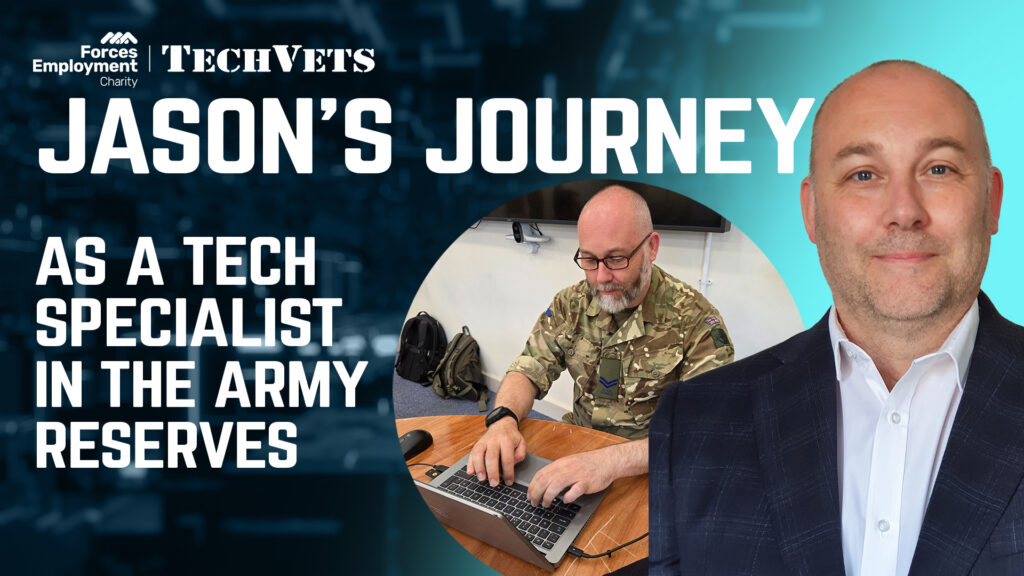
“SGIS works like a tech and cyber consultancy embedded within Defence,” Jason explains. “We support the Army, Navy and MOD with skills and knowledge they don’t have in-house. It’s about making things work better, smarter, and more securely.”
His own background in service management, particularly in the civil nuclear sector with Magnox, gave him the perfect foundation. Having overseen large-scale IT operations involving multiple stakeholders—from Sellafield to the Low Level Waste Repository—Jason developed an acute understanding of digital transformation, incident response, and system governance.
“I studied ITIL and moved up from server support to become a change manager,” he says. “Eventually, I took on the role of service manager—responsible for making sure outsourced services by Atos were delivered to the standards our users needed.”
He describes service management as the bridge between technical teams and everyday users. “You need to be tech-literate enough to understand problems, but more importantly, you need to translate those issues into plain English so people can understand what’s happening and how it’ll be fixed.”
This ability to connect people and systems isn’t just valuable in the private sector—it’s crucial in the military too.
In SGIS, Jason works with other reservists and full-time military personnel to tackle complex digital infrastructure problems. His job is to bring the same service delivery mindset—rooted in stakeholder engagement, communication, and problem-solving—to defence environments where operational effectiveness is paramount.
But what makes Jason stand out is his commitment to people. During his time managing IT change, he made a point of physically visiting his Atos counterparts around the country. “It wasn’t just about ticking boxes on a service level agreement,” he says. “I’d stop at their office en route to meetings and have a coffee with them. It helped build real human relationships, which made everything smoother.”
These interpersonal skills are equally useful in a military context, where collaboration across units and specialisms is key. His efforts meant that change plans impacting entire nuclear facilities could be managed proactively—sometimes months in advance—with minimal disruption.
His advice to anyone in tech considering a career as a reservist?
“Just go for it. The military is crying out for people with civilian experience—whether that’s cyber, AI, service delivery or data analysis. You get to contribute to something bigger while learning new skills and building a network you wouldn’t find anywhere else.”
Jason’s story reminds us that the reserves aren’t just about drills and discipline. They’re about ideas, innovation, and impact. For professionals with the right mindset, the rewards—both personal and professional—can be huge.
Want to follow Jason’s path?
TechVets is here to support veterans, reservists, and forces families into roles in tech and cybersecurity. Learn more and sign up at techvets.co.
